Food franchising will always be attractive.
It’s visible, familiar, and easy to understand. People see busy locations and assume the model must be profitable. But experienced investors know the truth:
Food franchises can generate strong revenue, while still creating weak ownership outcomes.
The biggest problem isn’t the concept. It’s the structure most owners buy into.
And the reason territory owners win is because they don’t play the same game.
Table of Contents
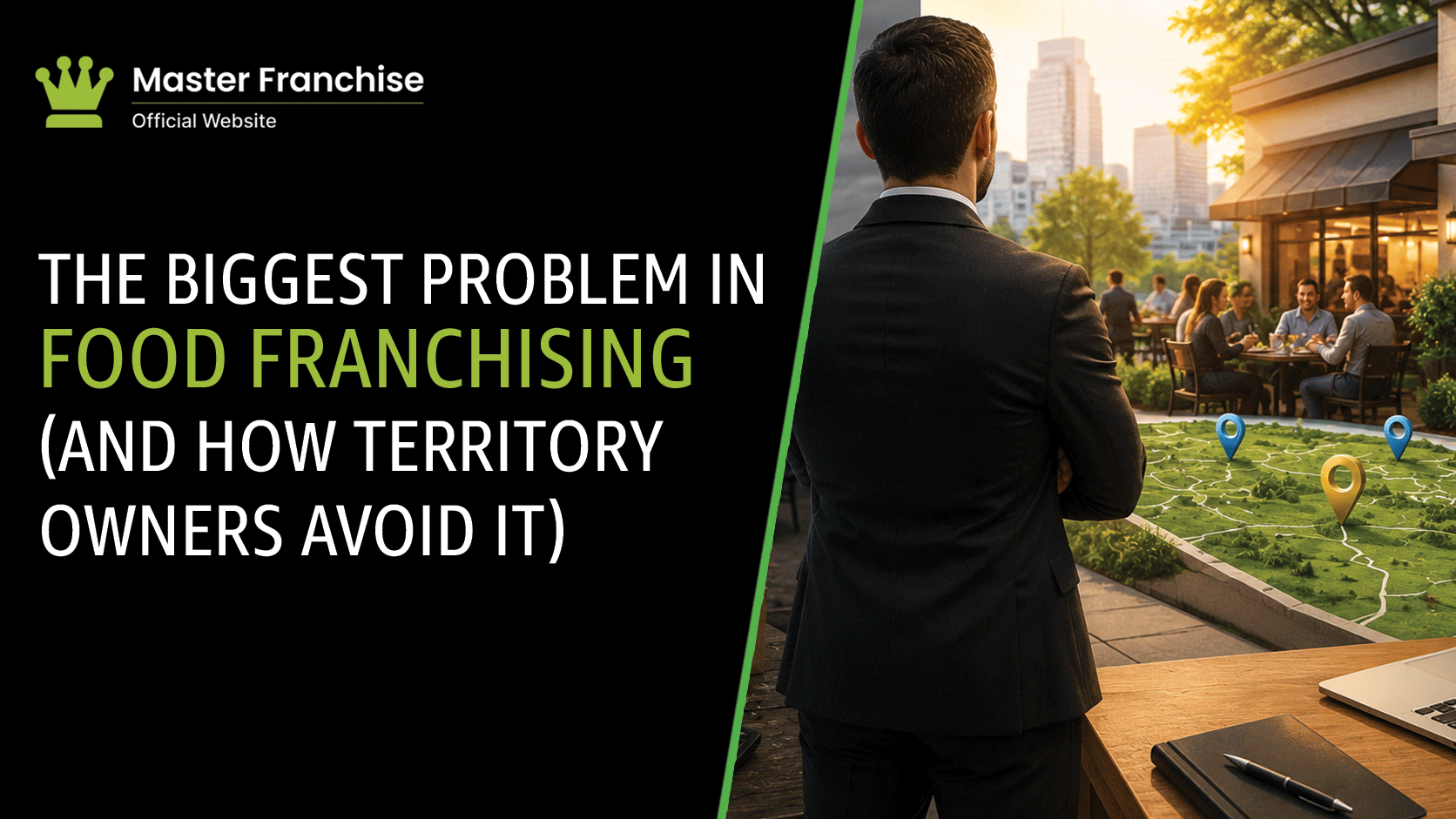
The Biggest Problem in Food Franchising: You Can’t Scale Without More Labor
Most food franchise owners don’t own a business.
They own an operation that requires constant labor.
In food, scaling revenue often requires:
- more staff
- longer hours
- more training
- more mistakes
- more management pressure
Even successful units can become fragile because the model depends on:
- labor availability
- consistency under pressure
- daily execution
- high volume and speed
This creates a common trap:
High revenue, low freedom.
And when labor costs rise or staffing becomes unstable, profitability gets squeezed quickly.
Why This Problem Gets Worse Over Time
Food franchising has structural headwinds:
- Labor costs keep increasing
- Employee turnover remains high
- Food costs fluctuate constantly
- Customer loyalty is fragile
- Competition is relentless
Even a strong operator can feel like they’re running uphill. This is why many single-unit food owners burn out, not because the brand is bad, but because the model is heavy.
How Territory Owners Avoid the Trap
Territory owners don’t win by working harder.
They win by owning leverage.
Instead of buying one unit and fighting daily operations, territory owners control a region and build a scalable platform around it.
Here’s how.
1. They Own Market Rights, Not Just One Store
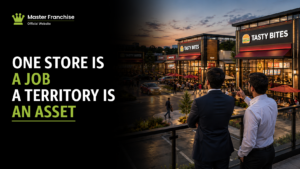
A single unit is replaceable.
A territory is defensible.
When you control a region, you gain:
- exclusivity
- expansion runway
- market density
- long-term strategic value
This shifts the asset from “one store” to “regional footprint.”
2. They Build a System That Runs Multiple Units
Territory owners invest in infrastructure early:
- regional marketing systems
- recruiting pipelines
- training processes
- operational playbooks
- area management structure
This reduces owner dependency and improves consistency across locations.
Scaling becomes a process, not a personal sacrifice.
Looking for Proven Master Franchise
Opportunities?
Explore established franchise brands and learn how
experienced master franchisees have successfully developed regional and international markets.
3. They Use Scale to Improve Unit Economics
Scale changes cost structure.
Territory owners often benefit from:
- shared staff across locations
- better vendor relationships
- centralized admin and payroll
- marketing efficiency
- stronger local brand dominance
Even if each unit is not “perfect,” the portfolio becomes stronger than any single store.
4. They Create Leadership Layers
Single-unit owners often act as the manager.
Territory owners build:
- store managers
- district managers
- area operations leaders
This is how the business stops being an owner-run job and becomes a scalable asset.
5. They Focus on Predictability Over Popularity
Food trends change.
Territory owners prioritize models that create repeat demand through:
- strong systems
- operational consistency
- simple menus
- efficient workflows
- disciplined expansion
The goal is not to build the most exciting unit. It’s to build the most reliable platform.
6. They Design for Exit Value
A single restaurant often sells as a job.
A territory platform sells as an asset.
Strategic buyers pay more for:
- multi-unit footprints
- market density
- stable management
- repeatable performance
Territory owners build something that can be acquired, not just operated.
FAQs
Conclusion
The biggest problem in food franchising isn’t competition, rent, or even food costs.
It’s the reality that most owners can’t scale without becoming more operationally trapped.
Territory owners avoid this by buying leverage:
- market control
- infrastructure
- systems
- leadership layers
- scalable economics
In food franchising, the difference between a job and an empire is not effort.
It’s ownership structure.
Explore Master Franchise
Opportunities
Connect with franchisors seeking experienced master
franchise partners for international and regional territory development.