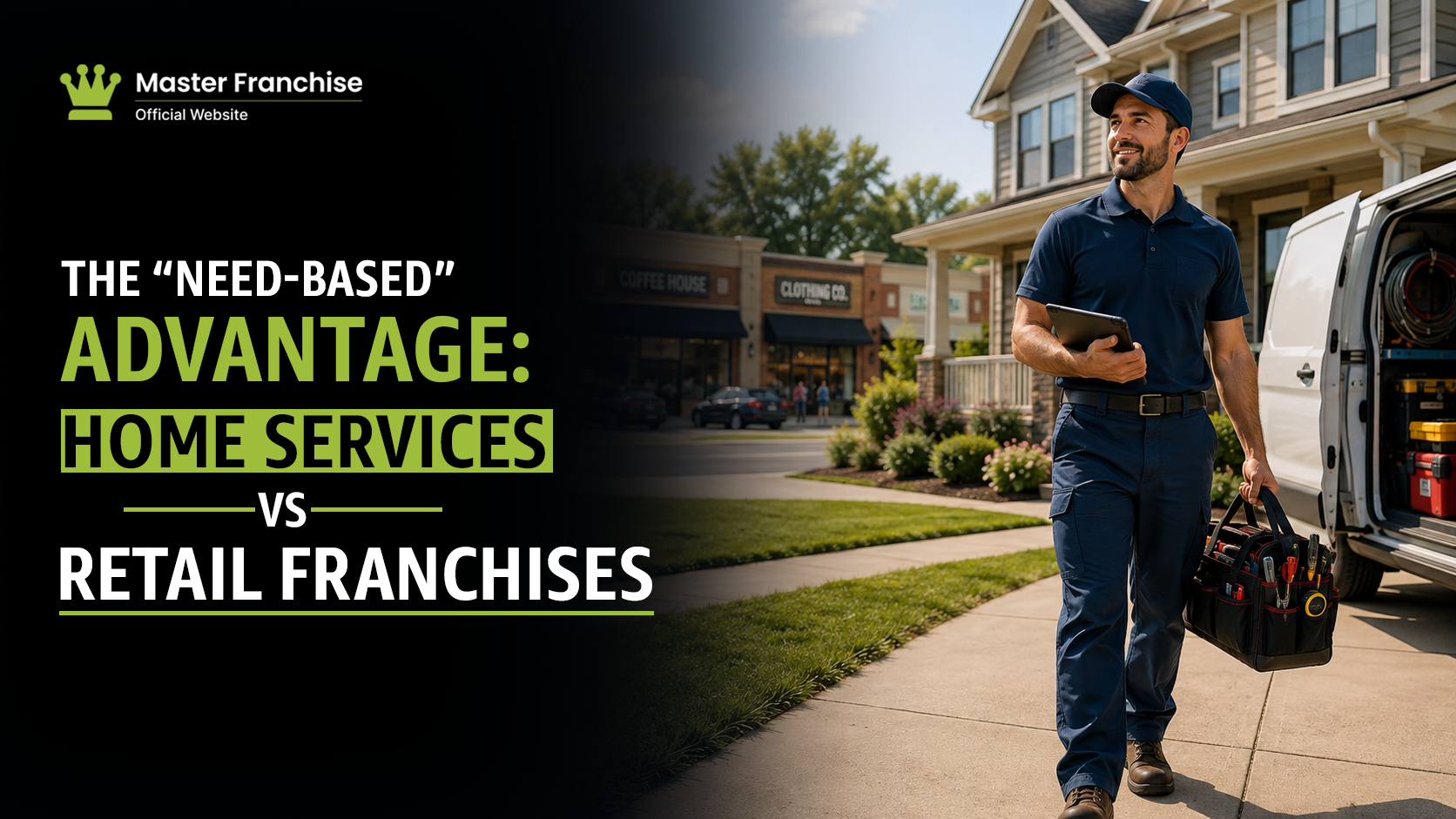
There are different types of demand for different franchises.
Others are based on the desire to spend; they are selected when customers’ mood, trends,
and disposable income match up.
Others are built on need-based demand services people must use regardless of economic
conditions.
This difference is one of the biggest reasons serious investors often favor home
services franchises over traditional retail concepts.
Here’s why need-based models consistently offer a structural advantage.
Table of Contents
- Need-Based Demand Creates Stability
- Retail Depends Heavily on Consumer Mood
- Recurring Revenue Is Easier to Build
- Operational Simplicity Favors Scaling
- Build School Partnerships Early
- Staffing and Inventory Risk Is Lower
- Investors Value Predictability Over Excitement
- Territory Expansion Works Better With Need-Based
Models - Frequently Asked Questions
1. Need-Based Demand Creates Stability
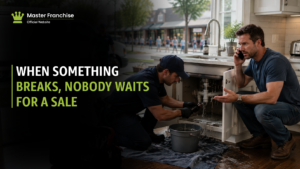
Home services solve problems that cannot be postponed for long.
Examples include:
- repairs and maintenance
- cleaning and restoration
- plumbing and HVAC services
- landscaping and exterior care
- pest control and safety services
Homeowners don’t wait for the perfect time when:
- something breaks
- maintenance is required
- safety is at risk
This creates ongoing demand that isn’t tied to consumer trends.
2. Retail Depends Heavily on Consumer Mood
Retail franchises often rely on:
- foot traffic
- discretionary spending
- trend cycles
- seasonal buying behavior
When confidence drops, consumers delay purchases.
Retail concepts may experience:
- volatile revenue swings
- higher promotional pressure
- increased marketing dependency
Need-based services are far less exposed to these shifts.
3. Recurring Revenue Is Easier to Build
Many home service models naturally support recurring relationships:
- maintenance plans
- seasonal service subscriptions
- annual contracts
- preventative care programs
Recurring clients reduce:
- customer acquisition pressure
- revenue volatility
- reliance on discounts
Retail concepts often must re-earn the customer every visit.
4. Operational Simplicity Favors Scaling
Looking for Proven Master Franchise
Opportunities?
Explore established franchise brands and learn how
experienced master franchisees have successfully developed regional and international markets.
Home service franchises usually operate with:
- smaller physical footprints
- mobile or field-based teams
- lower real estate costs
- centralized scheduling systems
Compared to retail, this means:
- lower fixed overhead
- faster expansion potential
- easier territory scaling
For investors, lower complexity often equals faster growth.
5. Customer Acquisition Costs Behave Differently
Need-based services benefit from urgency.
When a customer needs help, they search and buy quickly.
This creates:
- shorter sales cycles
- higher conversion intent
- strong local SEO performance
Retail brands often rely on ongoing advertising just to maintain traffic.
6. Staffing and Inventory Risk Is Lower
Retail franchises frequently manage:
- inventory forecasting
- shrinkage and dead stock
- merchandising complexity
- large in-store teams
Home service franchises typically focus on:
- skilled technicians
- route efficiency
- service delivery systems
Less inventory risk means more predictable margins.
7. Investors Value Predictability Over Excitement
Buyers and operators increasingly favor models that offer:
- recurring demand
- stable margins
- transferable operations
- low economic sensitivity
That’s why many home service franchises command strong valuations despite being less
“flashy.”
8. Territory Expansion Works Better With Need-Based
Models
Need-based services exist
in nearly every neighborhood.
Territory owners benefit from:
- geographic exclusivity
- route density
- repeat customers within a defined
radius
Expansion becomes a logical extension rather than a speculative leap.
FAQs
Conclusion
The biggest advantage of home services franchises is simple:
They solve problems people must fix, not just products people want to buy.
Need-based demand creates:
- predictable revenue
- resilient performance
- cleaner scaling
- stronger long-term value
While retail franchises can expand rapidly in times of strong consumer cycles, home
services can take the longer game by being consistent.
Need-based models continue to be one of the most viable options for franchise owners and
investors who are seeking stability and scalable growth.
Explore Master Franchise
Opportunities
Connect with franchisors seeking experienced master
franchise partners for international and regional territory development.