Energy is a MUST!
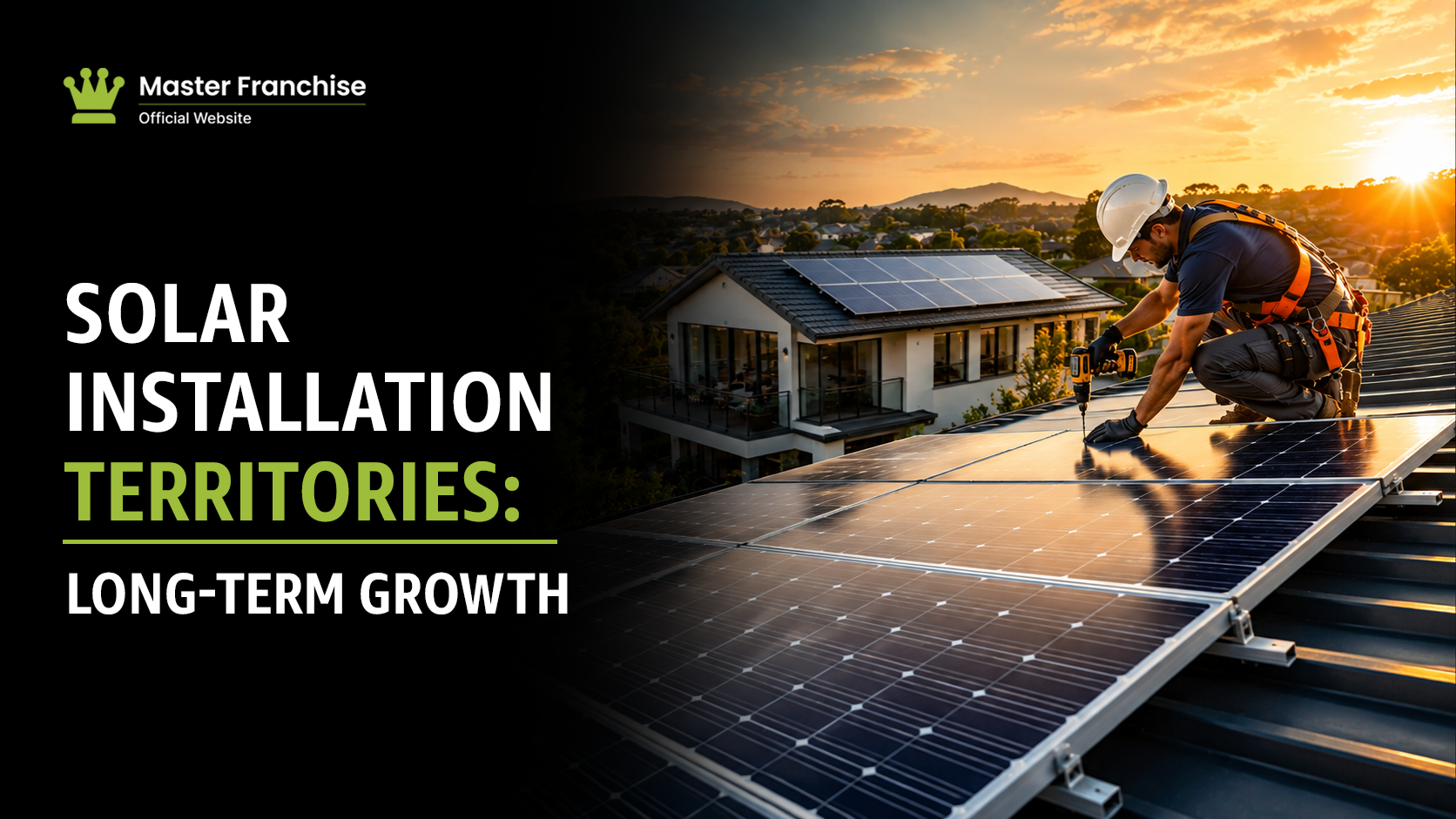
At the same time, as the cost of utilities increases and sustainability becomes a priority for homeowners and businesses. Solar installations are becoming more commonplace instead of infrastructure investment.
Solar franchising is not just a fad for investors and territory developers. It represents long-term structural demand tied to housing, regulation, and energy economics.
Table of Contents
The Demand Is Structural, Not Seasonal
Solar growth is driven by:
- Rising electricity costs
- Government incentives and tax credits
- Environmental awareness
- Increased homeownership in suburban markets
- Corporate sustainability mandates
Financial motivation is provided by energy savings that can be implemented, while discretionary services can not be implemented. Having solar power means they will save money on utility bills over time, making adoption a financial choice, rather than a lifestyle choice.
That makes the category resilient.
Why Territory Ownership Matters in Solar
Solar installation is hyper-local.
Each market has:
- Different permitting requirements
- Unique utility policies
- Specific climate patterns
- Distinct housing density
Territory control allows operators to build:
- Local contractor relationships
- Regional brand recognition
- Referral networks
- Permit familiarity and operational efficiency
This local advantage compounds over time.
Recurring Revenue Beyond Installation

Many investors assume solar is a one-time installation business.
In reality, scalable solar models often include:
- System monitoring services
- Maintenance contracts
- Battery upgrades
- EV charger installations
- Energy efficiency add-ons
These additional services increase lifetime customer value and strengthen recurring income streams inside the territory.
The B2B Expansion Layer
Solar is experiencing significant growth in the commercial sector beyond homes.
Solar is increasingly being used by office buildings, warehouses, retail centers and industrial facilities to combat long-term energy costs.
For territory developers, this creates:
- Larger contract values
- Repeat installation cycles
- Long-term service relationships
- Diversified revenue across residential and commercial segments
This dual-market opportunity strengthens territory economics.
Looking for Proven Master Franchise
Opportunities?
Explore established franchise brands and learn how
experienced master franchisees have successfully developed regional and international markets.
Scalability Through Systems
Modern solar franchise systems often provide:
- Centralized marketing support
- Lead generation platforms
- Supplier relationships
- Training and certification programs
- Compliance and regulatory guidance
This allows territory owners to focus on:
- team building
- project management
- regional expansion
- strategic partnerships
Not technical engineering alone.
Why Solar Fits the Master Franchise Model
Solar’s characteristics align strongly with territory-based growth:
- High ticket revenue per project
- Infrastructure-level demand
- Long sales cycles but strong margins
- Strong referral potential
- Multi-unit geographic expansion potential
As more installations accumulate within a region, brand visibility increases and marketing costs per project decline.
Scale builds leverage.
Where the Opportunity Is Strongest
Solar territories perform best in:
- High sun exposure states
- Suburban growth corridors
- Regions with favorable tax incentives
- Areas with rising electricity costs
- Markets with high homeownership rates
Understanding regional economics is critical when selecting territory rights.
FAQs
Conclusion
Solar installation isn’t a short-term opportunity.
It’s an infrastructure-driven growth sector tied to energy economics and regulatory support.
For investors seeking long-term territory expansion, solar offers:
- strong demand fundamentals
- high project values
- repeat service potential
- scalable regional dominance
In a world moving toward renewable energy, owning the territory may prove more powerful than owning a single project.
Explore Master Franchise
Opportunities
Connect with franchisors seeking experienced master
franchise partners for international and regional territory development.