Most investors come into franchising with a plan to open one unit.
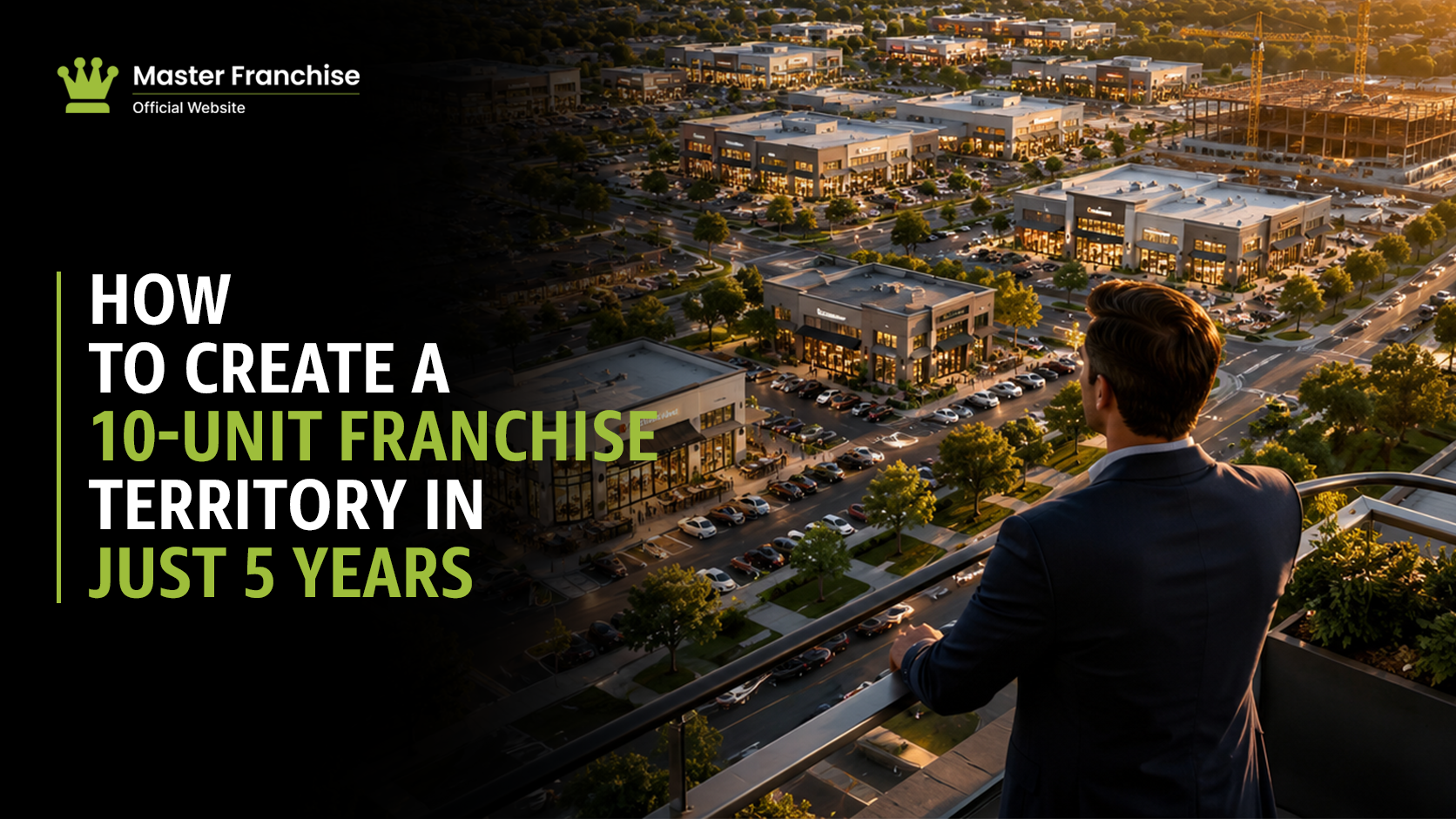
But with franchising, the real money is often in territory development, building out multiple units within a specified area.
A firm presence well-recognized within an entire metro area, as opposed to simply one or two stores, results in brand visibility, operational efficiency, and higher long-term enterprise value.
Herein lies the big question: How to scale from one location to ten locations in an organized manner?
Here is an actual blueprint that many top-performing franchise owners adhere to.
Table of Contents
It all begins with the right territory strategy

Successful operators map the whole territory before opening the first location.
They do not choose sites randomly; they assess:
- population density
- traffic patterns
- neighborhood growth corridors
- competitor locations
- real estate availability
This results in a long-term expansion plan, where every future unit enhances that network rather than competing with its existing locations.
Territory planning is the key to scalable growth.
Year 1: Developing the Flagship Location
The first one needs to be both:
- a profitable unit
- an operational blueprint
In this stage, the attention should be on:
- creating a solid local reputation
- improving staffing and training processes
- understanding customer demand patterns
- marketing and lead generation optimization
The objective is to build a system that can be repeated throughout the whole territory.
Year 2: Open Second and Third Locations
After stabilizing the first unit, expansion starts.
Launching more locations in the same metro market enables operators to take advantage of:
- shared marketing
- shared management
- stronger brand awareness
- operational efficiencies
At this point, many operators start to construct centralized management functions to drive additional growth.
Year 3: Build Market Density
Expansion will often be faster by the third year.
Operators concentrate on clustering locations strategically throughout the territory.
Benefits include:
- lower marketing expense per unit
- stronger referral networks
- improved logistics and staffing
- brand recognition across neighborhoods
This is where the organization grows beyond unit ownership to brand presence at a regional level.
Looking for Proven Master Franchise
Opportunities?
Explore established franchise brands and learn how
experienced master franchisees have successfully developed regional and international markets.
Year 4: System and Leadership Reinforcement
Leadership structure becomes paramount as the network booms.
Owners begin developing:
- regional managers
- standardized training systems
- centralized marketing coordination
- operational playbooks
These systems enable growth without adding to the owner’s daily responsibilities.
The company becomes a platform and not just a collection of sites.”
Year 5: Complete the Territory Network
In the fifth year, density can already reach the maximum in that territory.
A 10-unit network over a metro area usually results in:
- strong brand dominance
- predictable recurring revenue
- operational economies of scale
- higher business valuation
At this point, owners have the option to:
- keep growing across neighboring territories
- Convert to master franchise development
- sell some equity in the network to investors
- maintain the portfolio as a strategic long-term investment
Why Density Creates Value
The reason this strategy works is actually quite simple.
Ten units in one area tend to be exponentially more valuable than ten different spots across various markets.
Regional density creates:
- marketing efficiency
- operational consistency
- leadership scalability
- stronger resale value
That is why many successful franchise investors are pursuing territory development as opposed to single-unit ownership.
FAQ
Conclusion
Creating a 10-unit territory means something different than just opening stores as quickly as possible.
It’s about structured expansion.
It begins with one good location, refining the system, density by area, then growing out the leadership and infrastructure to scale.
The opportunity isn’t just about one business for those investors who take a long-term approach to franchising.
It’s an entire regional platform.
Explore Master Franchise
Opportunities
Connect with franchisors seeking experienced master
franchise partners for international and regional territory development.