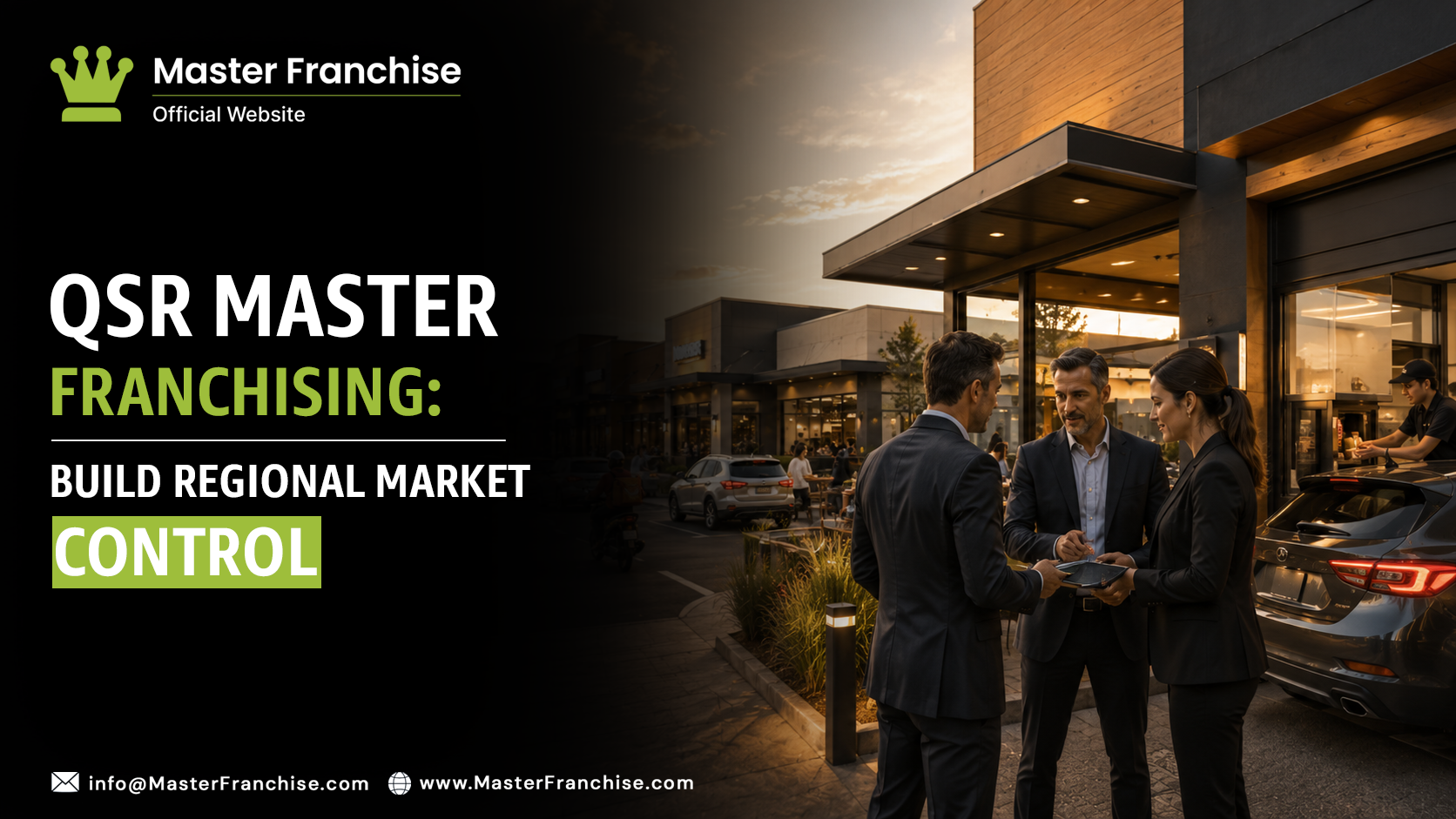
When the average person sees QSR franchising, they think of restaurants.
Menus.
Locations.
Daily sales.
But smart franchise investors know better.
They concentrate on rather an additional better thing:
Regional market control.
In master franchising, not just one hot restaurant.
To build a power station, right?
Table of Contents
- QSR Success Is Based on Consumer Frequency — You cannot lag in experimentation
- One Unit Generates Revenue. A Territory Creates Scale.
- Territory Density is Tyranny
- Every Day Consumer Behaviors Generate Predictable Revenue
- Multi-Unit Expansion Increases Operational Efficiency
- Real Estate Strategy Works with QSR Territories
- Delivery & Digital Ordering Expand Your Territory Strength
- Why Multi-Unit QSR Models Are Preferred by Investors
- Consumer Infrastructure is the Real Opportunity
- Frequently Asked Questions
QSR Success Is Based on Consumer Frequency — You cannot lag in experimentation
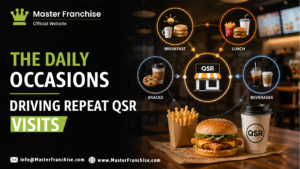
The reason quick-service restaurants thrive is they have one of the strongest business drivers possible:
Repeat daily demand.
Consumers purchase:
- Breakfast
- Lunch
- Snacks
- Beverages
- Convenience meals
again and again.
Nationally, this continually generate foot traffic and repeat buying across local markets.
One Unit Generates Revenue. A Territory Creates Scale.
However, one QSR location can thrive.
But with a territory based network the economics change entirely.
Operators benefit from having multiple locations in a region:
- Brand visibility
- Operational leverage
- Market density
- Supply chain efficiency
- Stronger consumer familiarity
The network grows to be worth more than the individual store ever was.
Territory Density is Tyranny
When there are multiple locations in the same market:
- Advertising becomes more efficient
- Consumer recognition grows
- Delivery coverage improves
- Rivals can’t seem to get going
This creates:
- Regional dominance
Master franchise operators avoid counting on one successful store to reach the next level.
Every Day Consumer Behaviors Generate Predictable Revenue
QSR creates a model based on repetition; unlike other dining concepts that may aim for a more casual approach.
Consumers return because of:
- Convenience
- Speed
- Familiarity
- Accessibility
This frequency creates:
- Predictable sales volume
- Strong repeat business
- Better revenue forecasting
Habit-based businesses scale more predictively.
Multi-Unit Expansion Increases Operational Efficiency
Operators can centralize as networks increase:
- Management
- Training
- Marketing
- Supply purchasing
- Staffing systems
This reduces operational complexity and enhances margins.
Scale creates leverage.
Looking for Proven Master Franchise
Opportunities?
Explore established franchise brands and learn how
experienced master franchisees have successfully developed regional and international markets.
Real Estate Strategy Works with QSR Territories
At master franchise operators the thing you can do strategically controls:
- High-traffic corridors
- Suburban growth zones
- Delivery-heavy markets
- Dense population clusters
Location positioning is one of those things that gets stronger the longer you do it; both:
- Consumer reach
- Market defensibility
Delivery & Digital Ordering Expand Your Territory Strength
Modern QSR structures are not constrained to inbound traffic from diners.
This could be via digital ordering and apps, as well as delivery platforms:
- Increase order frequency
- Expand customer radius
- Strengthen territory penetration
This is why having regional coverage becomes even more critical.
Why Multi-Unit QSR Models Are Preferred by Investors
QSR master franchising is appealing to sophisticated investors for the following reasons:
- Daily recurring demand
- Scalable operational systems
- Strong territory economics
- Repeat consumer behavior
- Multi-unit leverage
It takes the enterprise value of not just one or two stores for a long time.
Consumer Infrastructure is the Real Opportunity
Most operators focus on restaurants.
Master franchise investors focus on:
- Territory penetration
- Consumer habit formation
- Regional brand dominance
Because one restaurant serves customers.
A territory controls a market.
FAQ
Conclusion
QSR master franchising does not mean opening more stores.
Its about creating a scalable regional system built on:
- Daily consumer demand
- Territory density
- Operational leverage
- Repeat purchasing behavior
The opportunity for serious investors is not- in 1 unit.
It lies in linking a network that integrates into the practices of an entire territory.
Because in franchising:
One store generates sales.
A territory creates market control.
Explore Master Franchise
Opportunities
Connect with franchisors seeking experienced master
franchise partners for international and regional territory development.