Traditional retail is changing.
Consumers no longer come to stores simply to buy products.
They want:
- Experiences
- Interaction
- Community
- Entertainment
- Personal connection
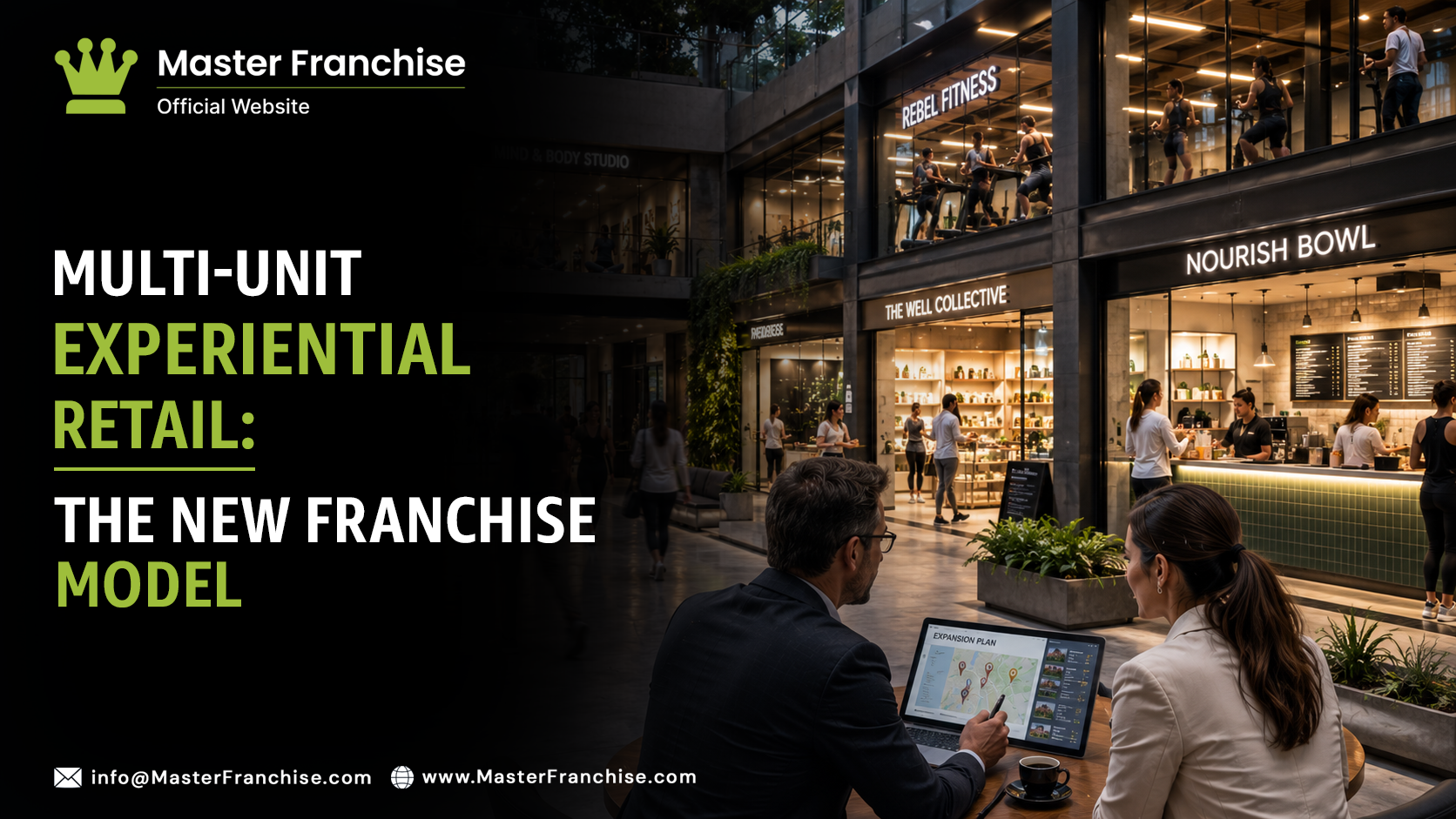
Such a shift is producing an attractive new segment of franchise development:
experiential retail.
That innovation is more attractive than ever for master franchise developers and multi-unit investors.
Table of Contents
- Retail Is Moving Beyond Transactions
- Experience Increases Consumer Retention
- Multi-Unit Expansion Creates Brand Ecosystems
- Location Strategy Becomes More Powerful
- Social Media Amplifies Territory Growth
- Premium Positioning Improves Margins
- More Scalability around Operational Systems
- Territory Density Builds Consumer Familiarity
- Why Investors Are Paying Attention
- The Real Opportunity: You Own Their Attention
- Frequently Asked Questions
Retail Is Moving Beyond Transactions
Traditional retail often competes on:
- Price
- Discounts
- Convenience
Experiential retail competes differently.
It focuses on:
- Atmosphere
- Engagement
- Emotional connection
- Brand identity
Users spend more time eating up an interacting with it and get more loyal.
Experience Increases Consumer Retention

People may forget products.
They rarely forget experiences.
Experiential concepts often generate stronger:
- Repeat visits
- Word-of-mouth referrals
- Social sharing
- Community engagement
This improves Customer Lifetime Value across regions.
Multi-Unit Expansion Creates Brand Ecosystems
One place where this can happen is at experiential locations.
A regional network creates:
- Brand familiarity
- Consumer trust
- Lifestyle positioning
- Community presence
The denser it is, the more each place supports the others.
This turns isolated stores into:
- Territory-wide consumer ecosystems
Location Strategy Becomes More Powerful
This is particularly true for:
- High-foot-traffic districts
- Lifestyle-focused suburbs
- Entertainment corridors
- Mixed-use developments
This is where strategic structure for multi-unit operators places locations to capitalize on:
- Visibility
- Cross-market awareness
- Local dominance
Social Media Amplifies Territory Growth
Experiential concepts naturally generate:
- User-generated content
- Online sharing
- Organic brand visibility
The experience is often marketed by consumers themselves.
This reduces reliance on conventional advertising and enhances regional brand recognition.
Looking for Proven Master Franchise
Opportunities?
Explore established franchise brands and learn how
experienced master franchisees have successfully developed regional and international markets.
Premium Positioning Improves Margins
Experiential concepts can often charge more, in contrast to traditional retail competing on price:
- Premium pricing
- Higher average transaction values
- Stronger customer loyalty
Brand association is when consumers pay a premium by paying high prices.
- Entertainment
- Lifestyle
- Exclusivity
- Identity
More Scalability around Operational Systems
As such, modern experiential retail franchises progressively standardise:
- Store layouts
- Customer experiences
- Marketing systems
- Operational training
This is what makes multi-unit expansion so much more replicable than a lot of funders would presume.
Territory Density Builds Consumer Familiarity
When multiple locations roll out across a market:
- Occur more often with which consumers are interacting with the brand
- Recognition compounds
- Trust increases
This over time, creates a much stronger territory economics.
Why Investors Are Paying Attention
Experiential retail territories offer:
- Lifestyle-driven consumer demand
- Social-media-driven visibility
- Premium pricing potential
- Scalable multi-unit growth
- Strong community engagement
This combination rounds out a vision for a contemporary franchise established on:
- Consumer experience — rather than simply raw transactions
The Real Opportunity: You Own Their Attention
Most retailers sell products.
Experiential retail brands capture:
- Time
- Attention
- Emotional engagement
It builds more profound consumer associations and better long-term market placement.
FAQs
Conclusion
One of the largest changes to franchise in some time has been experiential retail.
Consumers increasingly value:
- Connection
- Engagement
- Memorable experiences
Multi-unit operators that surround these behaviors on a territory basis can create very scalable regional networks.
Because in modern franchising:
Traditional retail sells products.
Experiential retail builds consumer ecosystems.
Explore Master Franchise
Opportunities
Connect with franchisors seeking experienced master
franchise partners for international and regional territory development.