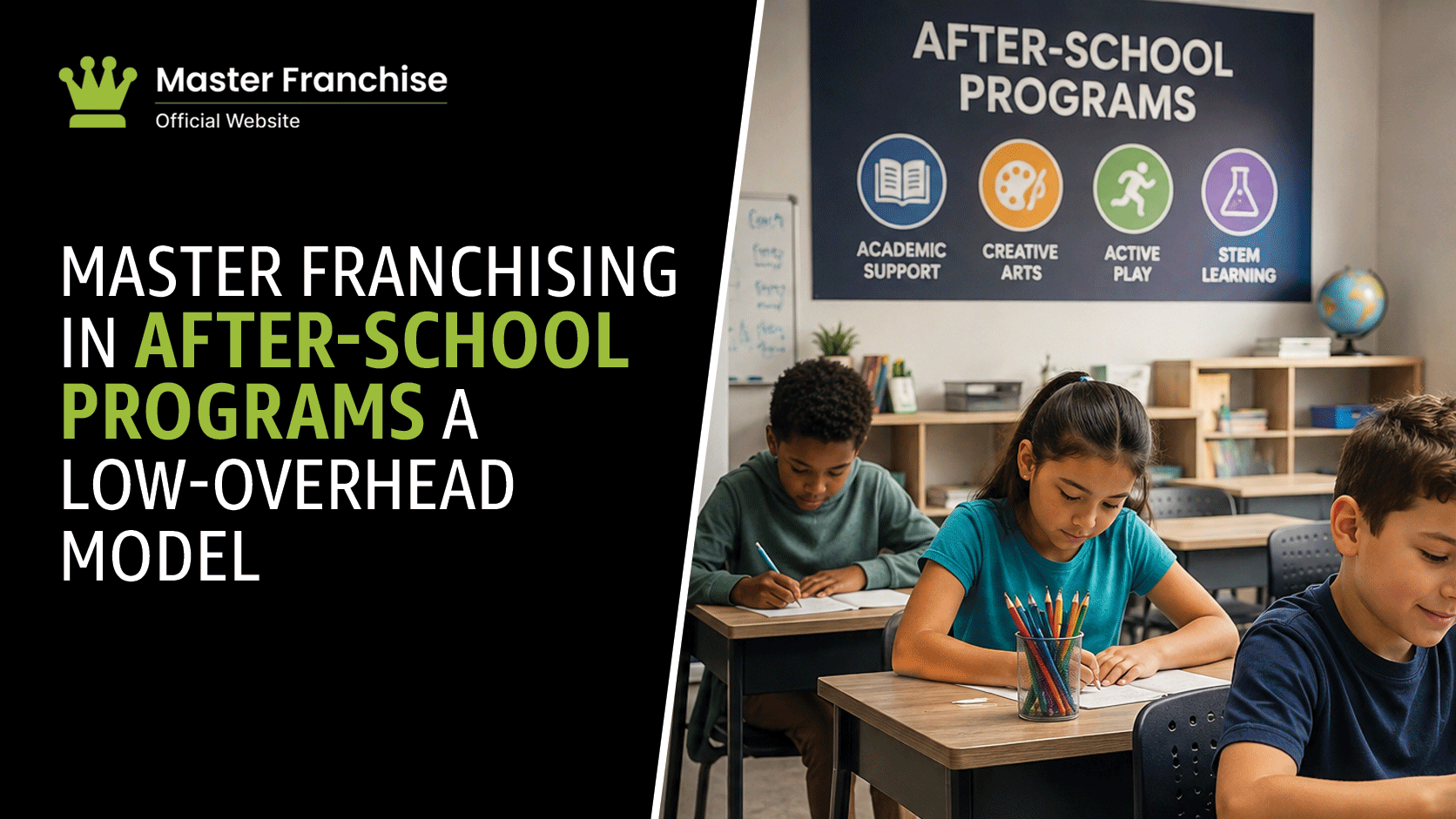
After-school programs are at the nexus of the education, childcare, and enrichment sectors, and are consistently in demand during various economic conditions. After-school programs have become one of the most effective and consistent services being offered in a franchising context as parents search for a variety of structured activities that are safe and enriching for their kids.
The true potential for investors is not running one center but Master Franchising, in which the regional owners expand networks of programs with very low overhead and recurring revenue.
Here’s why after-school programs are emerging as a powerful, low-risk Master Franchise model.
Table of Contents
- Demand Is Non-Cyclical and Parent-Driven
- The Model Is Naturally Low Overhead
- Subscription-Based Revenue Creates Predictability
- Master Franchise Owners Do Not Deliver the Service
- Easy Replication Across Cities and Suburbs
- Strong Appeal to Franchise Buyers
- Attractive Exit Potential
- Frequently Asked Questions
1. Demand Is Non-Cyclical and Parent-Driven
Education and child development are important priorities for parents, even in times of economic downturn. Demand comes from:
- Dual-income households
- Longer workdays
- Academic pressure
- Demand for structured, safe environments
- Focus on skills beyond traditional schooling
This makes after-school programs far more stable than discretionary consumer businesses.
2. The Model Is Naturally Low Overhead

Unlike traditional retail or fitness concepts, after-school programs often operate with:
- Small physical footprints
- Shared or leased spaces (schools, community centers)
- Limited equipment
- Predictable staffing schedules
- Simple operational requirements
This low-overhead structure will enhance margins and make it easier to scale up regionally.
3. Subscription-Based Revenue Creates Predictability
Most after-school franchises run on:
- Monthly tuition plans
- Semester-based programs
- Annual enrollment models
This creates predictable, recurring revenue, one of the most attractive traits for both Master Franchise owners and future buyers.
4. Master Franchise Owners Do Not Deliver the Service
A key advantage of this model is role separation.
Master Franchise owners:
- Develop the territory
- Recruit and support franchisees
- Oversee brand standards
- Drive regional growth
Franchisees handle:
- Daily program delivery
- Staff and instructors
- Parent communication
- Local operations
This allows Master Franchise owners to scale without being tied to classrooms or schedules.
Looking for Proven Master Franchise
Opportunities?
Explore established franchise brands and learn how
experienced master franchisees have successfully developed regional and international markets.
5. Easy Replication Across Cities and Suburbs
After-school programs are highly replicable because:
- Curriculum is standardized
- Training is structured
- Parent needs are universal
- School calendars are predictable
A single metro area can often support dozens of locations, each contributing recurring royalties.
6. Strong Appeal to Franchise Buyers
fter-school franchises attract a wide buyer pool, including:
- Educators and administrators
- Corporate professionals
- Parent-entrepreneurs
- Mission-driven operators
This demand makes territory development faster and more sustainable for Master Franchise owners.
7. Attractive Exit Potential
Education-based franchises are increasingly attractive to:
- Private equity
- Strategic education groups
- Multi-brand franchise operators
A Master Franchise territory with multiple active programs, recurring tuition revenue, and low overhead becomes a highly valuable regional asset.
FAQs
Conclusion
Master Franchising after-school programs have a unique mix of stability, scale and simplicity. This model provides low overheads, subscription-based revenue, and high demand from parents, enabling investors to create meaningful and recession-proof regional businesses without having to be involved in the daily activities.
If you are looking for a mission-focused franchise opportunity that offers a genuine long-term growth opportunity, you’ll want to look into after-school Master Franchising.
Explore Master Franchise
Opportunities
Connect with franchisors seeking experienced master
franchise partners for international and regional territory development.