The biggest shift in franchising isn’t happening at the unit level, it’s happening at the ownership mindset level.
Experienced investors are no longer asking, “Which restaurant should I run?”
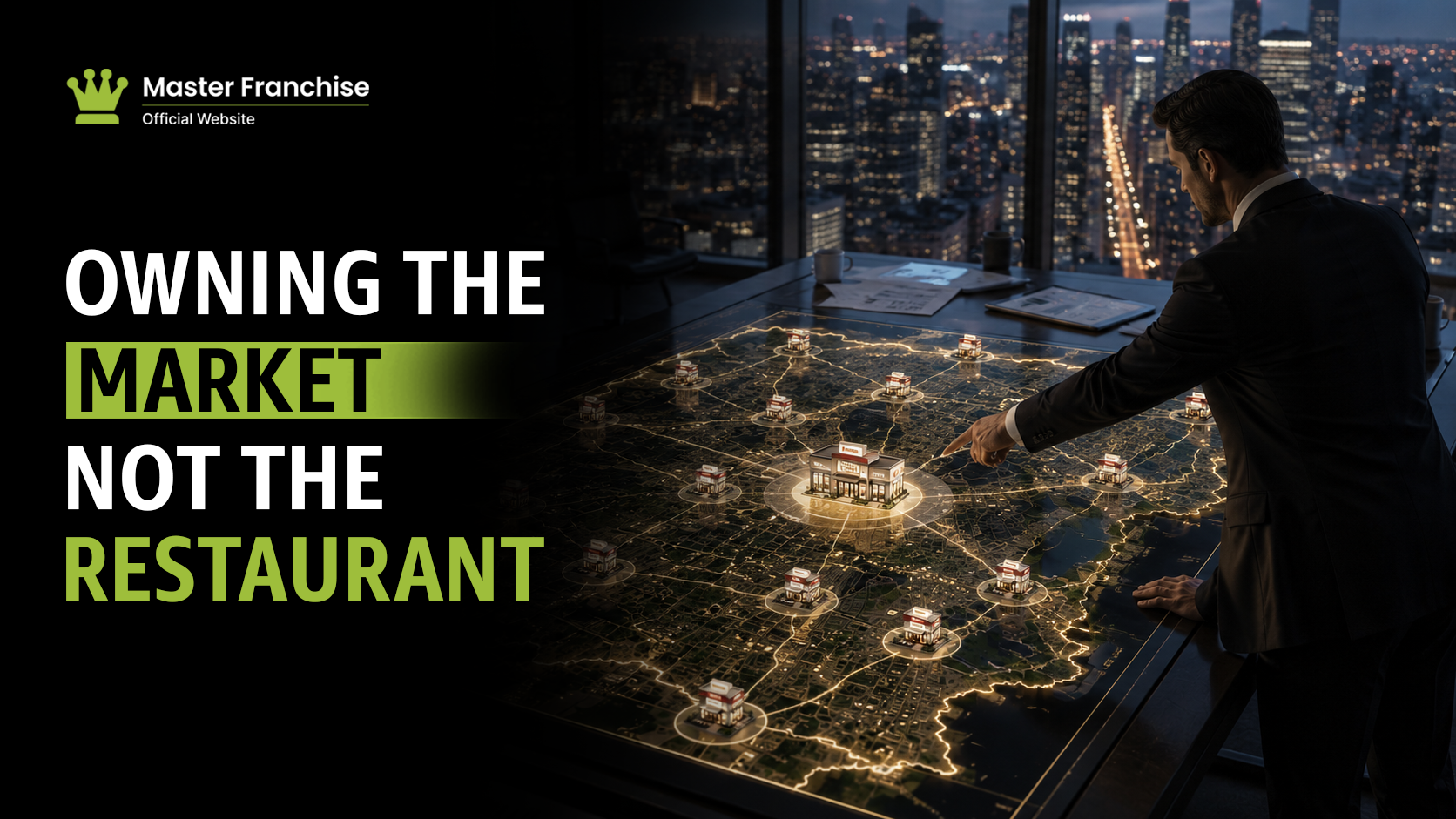
They’re asking, “Which market should I control?”
This distinction separates owner-operators from true franchise investors. And it’s why territory-based models area development and master franchising are becoming the preferred path for building scalable, defensible franchise assets.
Table of Contents
1. Restaurants Are Businesses. Markets Are Assets.

A single restaurant generates income. A controlled market generates leverage.
When you own territory rights, you’re not dependent on:
- One location’s performance
- One manager
- One lease
- One revenue stream
Instead, you control:
- Unit growth across a region
- Franchisee placement
- Brand density
- Long-term market share
Markets appreciate. Single locations cap out.
2. Territory Control Multiplies Revenue Streams
Owning one restaurant limits upside to unit-level profit.
Owning a market unlocks:
- Franchise fees from new units
- Ongoing royalties
- Shared marketing efficiencies
- Regional brand dominance
- Enterprise-level exit value
This is how investors move from income to infrastructure.
Looking for Proven Master Franchise
Opportunities?
Explore established franchise brands and learn how
experienced master franchisees have successfully developed regional and international markets.
3. You Manage Systems, Not Shifts
Single-unit ownership often means:
- Staffing issues
- Daily fire drills
- Schedule gaps
- Owner dependency
Market ownership flips the role.
Territory owners focus on:
- Recruiting operators
- Enforcing systems and standards
- Monitoring performance metrics
- Strategic expansion
That’s oversight, not operations.
4. Density Beats Scale-in-Isolation
Five random locations across five cities are hard to manage. Five locations in one metro area create power.
Market density allows:
- Shared managers and support staff
- Regional marketing dominance
- Brand familiarity and trust
- Lower per-unit operating costs
This is why professional investors expand horizontally within a market before expanding geographically.
5. Buyers Pay Premiums for Markets, Not Stores
When it’s time to exit, buyers don’t just evaluate EBITDA.
They ask:
- How defensible is the territory?
- Is growth still available in this region?
- Are systems centralized?
- Can this platform expand further?
Market-controlled platforms attract:
- Strategic buyers
- Private equity
- Regional consolidators
Single restaurants attract operators. Markets attract investors.
6. This Is How Franchise Wealth Is Actually Built
Most franchise success stories didn’t come from running one great location for 20 years.
They came from:
- Owning early territory rights
- Building density before competition arrived
- Leveraging other people’s capital (franchisees)
- Exiting at the platform level
That’s how small decisions turn into outsized outcomes.
FAQs
Conclusion
Restaurants generate income. Markets generate control, leverage, and long-term equity.
The smartest franchise investors don’t aim to be the best operator on the floor. They aim to be the owner of the territory where everyone else operates.
If you’re thinking beyond your first unit and toward building a real asset, the question isn’t which restaurant to own.
It’s which market you want to own.
Explore Master Franchise
Opportunities
Connect with franchisors seeking experienced master
franchise partners for international and regional territory development.