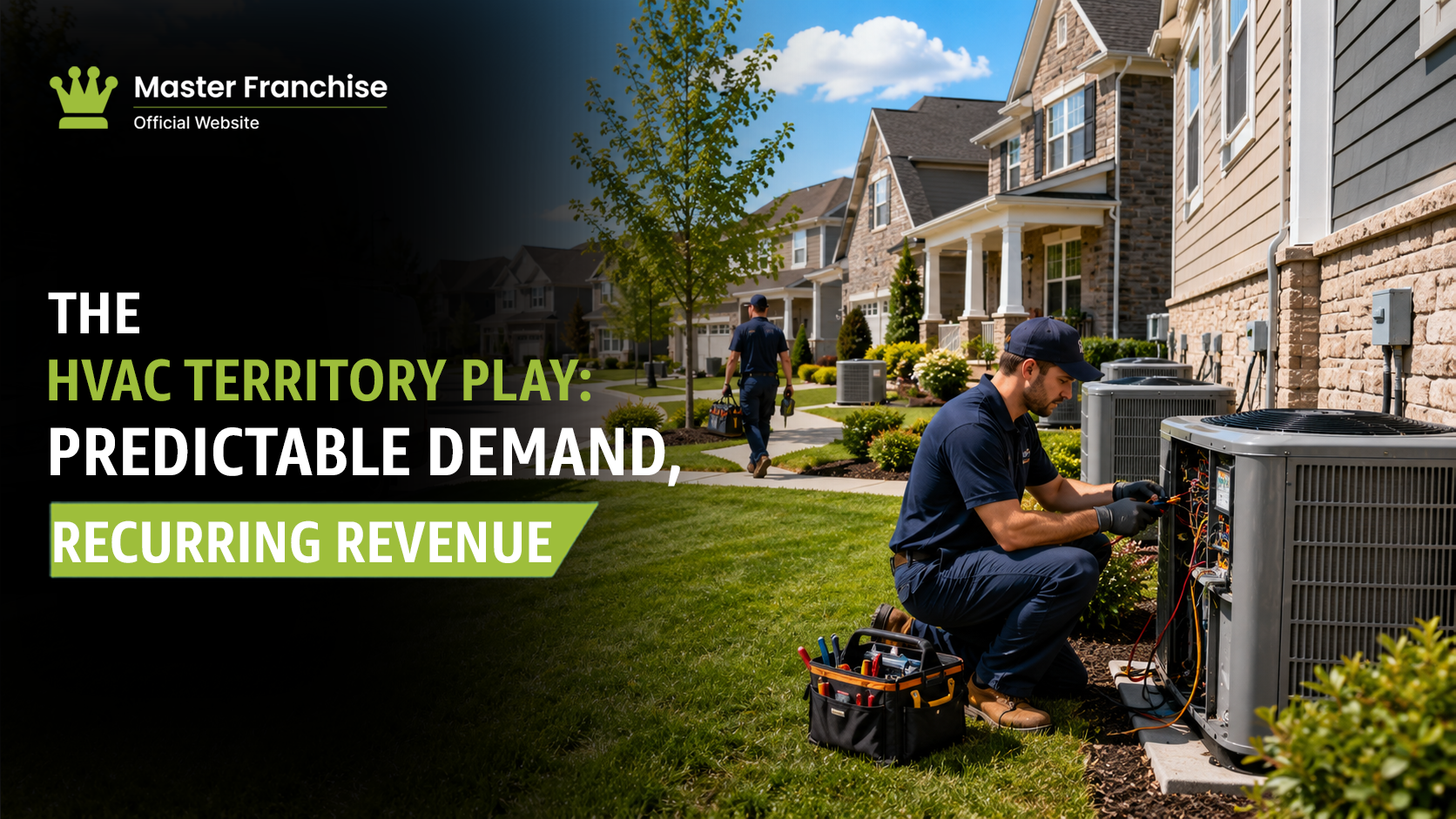
When it comes to expansion by territory, few categories of franchise have become as popular as those in the home service sector.
Inside this industry, HVAC (Heating, Ventilation, and Air Conditioning) services are exceptional for their predictable demand and robust recurring service requirements.
As homes, offices, and commercial buildings depend on climate control systems year-round, HVAC services will be needed regardless of economic cycles.
For territory developers, this formulates a growth model that hinges upon ongoing service demand and sustained customer connections.
Table of Contents
We Need Climate Control
Whereas many consumer services are optional, HVAC maintenance and repair often is not.
Customers need service quickly when heating systems fail in the winter or cooling systems stop working in the summer.
This creates a continual need for technicians who can diagnose and fix systems fast.
Since climate control is vital in modern structures, HVAC services are perennially important across the residential and commercial markets.
Seasonality Creates Predictable Demand Cycles

These HVAC companies even have the advantage of seeing similar seasonal demand patterns year after year.
For example:
- Summer months usually have high demand for AC repair and installation
- Demand for heating system maintenance and replacement rises during the winter months
- Spring and fall are commonly used for preventive maintenance and system inspections
These seasonal cycles allow operators to predict staffing needs, service schedules, and revenue opportunities.
Maintenance Contracts Offer Recurring Revenue
Numerous HVAC companies offer maintenance contracts that consist of routine checks and maintenance for the system.
These programs provide continued system maintenance for homeowners and a steady income stream for the operators.
Maintenance plans also bolster customer relationships and encourage customers to select the same provider for future repairs and replacements.
Looking for Proven Master Franchise
Opportunities?
Explore established franchise brands and learn how
experienced master franchisees have successfully developed regional and international markets.
Territory Density Improves Efficiency
The territory model is highly effective for HVAC businesses since the service call is location-based.
When operators develop a large customer base through area targeting say timers that lead users to build out large customer bases in a small geographic region technicians can complete multiple jobs per day within the same, small geographic area.
This improves:
- scheduling efficiency
- travel time management
- technician productivity
- customer response times
Having high territory density also helps to build a brand in local communities.
High-Value Jobs Are Created by Replacement Cycles
Long story short, HVAC systems must be replaced eventually.
Such replacement cycles tend to be 10, 15 years or more depending on the system type and maintenance.
Beyond preventive maintenance, though, system replacements are high-ticket services that can earn big dollars within legacy territories.
Why Are Investors Paying Attention
There are many reasons HVAC franchises attract territory developers:
- essential service demand
- recurring maintenance programs
- predictable seasonal cycles
- scalable local operations
- long-term customer relationships
Such traits lay durable foundations for regional service networks.
FAQs
Conclusion
HVAC Services: A Great Way to Promote Your Business.
Because heating and cooling systems rely on routine maintenance and replacement, demand for the industry is consistent; revenue is recurring.
The HVAC model provides territory developers with predictable service cycles, strong customer intimacy, and scalable regional expansion.
One of the most stable territory-based business opportunities for today is HVAC franchises, as demand for efficient climate control keeps rising.
Explore Master Franchise
Opportunities
Connect with franchisors seeking experienced master
franchise partners for international and regional territory development.